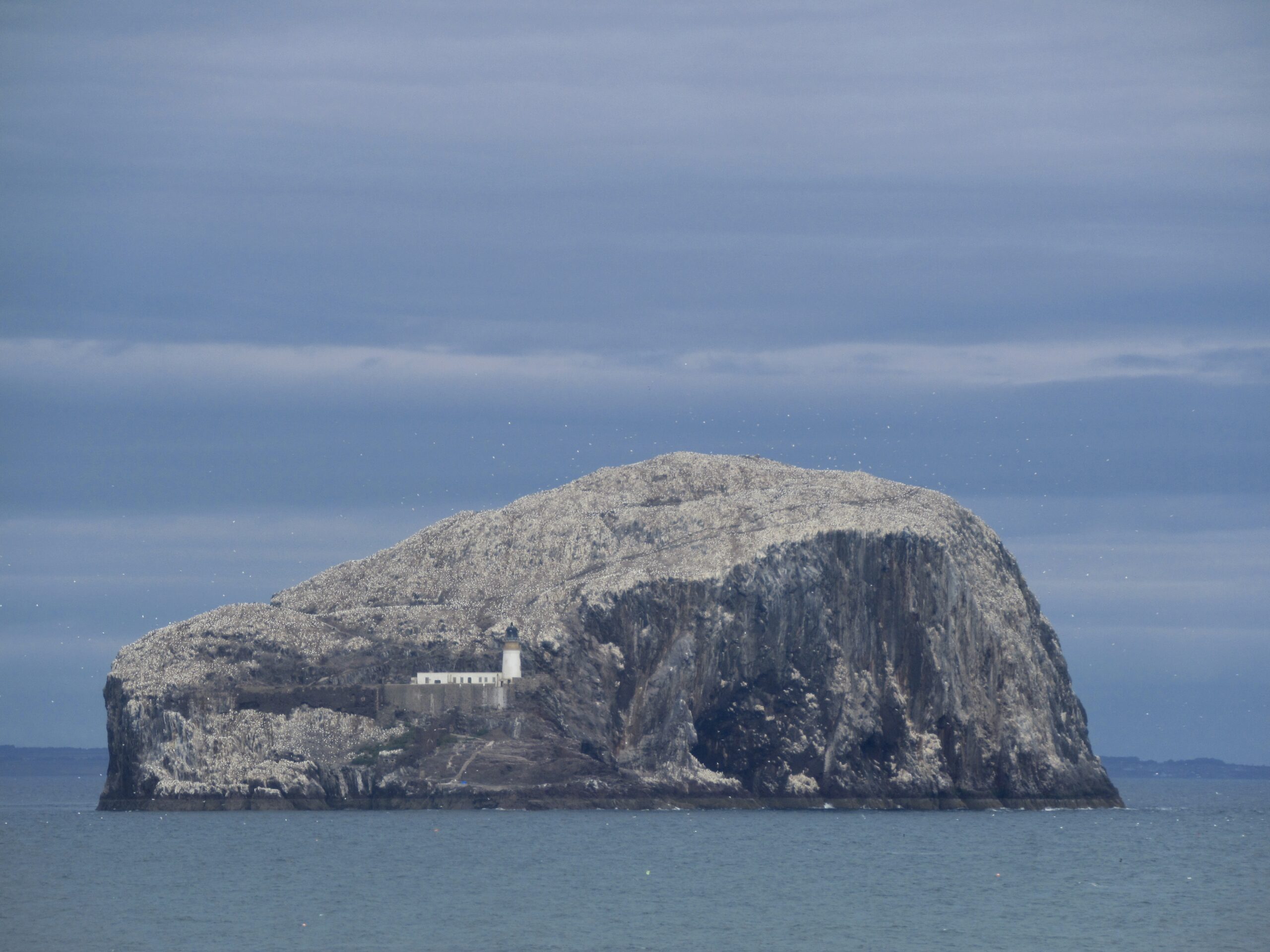
Rising like a massive, chalk-white fortress out of the Firth of Forth, the Bass Rock is one of the most jaw-dropping wildlife spectacles on planet Earth. Located just over two miles off the coast of North Berwick, this sheer volcanic island appears bright white for most of the year. But that isn’t snow, and it isn’t just the colour of the stone. It is the combination of tens of thousands of swirling and nesting seabirds, and their subsequent guano. Welcome to the Kingdom of the Gannets.
Sir David Attenborough famously highlighted the island on his BBC Wild Isles series, showcasing it as the single largest island colony of Northern Gannets in the world.
To see it with your own eyes is one hell of a spectacle. As you get up close to it on the boat it really attacks the senses. The air hits you with a sharp, eye-watering scent, the sky is full of gannets soaring in what feels like slow motion, and the noise from the nesting birds is deafening. Whether you’re making the quick trip down from Edinburgh for the wildlife or you’re just fascinated by the history of this island, here is everything you need to know before you book a boat out there.

Bass Rock Lighthouse
The true rulers of this island are the Northern Gannets (Morus bassanus). In fact, these birds are so deeply tied to this specific lump of stone that their scientific name was literally derived from the Bass Rock itself.
Gannets are the UK’s largest seabirds, sporting a massive 2m wingspan, dazzling bright white plumage, distinctive black wingtips, and a soft, dusky-yellow head with piercing blue eyes. Watching them hunt is like watching a military air show. They cruise high above the water, lock eyes on a fish, fold their wings tight against their bodies like fighter jets, and dive-bomb into the ocean at speeds up to 60 mph. In a matter of seconds the gannet flips the fish around head-first (herring or mackerel) and swallows it completely whole while still submerged.
As you can tell they are incredibly aggressive feeders which explains why, in British slang, calling someone a “gannet” means they are greedy, gluttonous, or notorious for clearing a dinner table in seconds!
How do they survive that high-speed impact without breaking their necks? Nature engineered them perfectly: they have built-in air sacs in their face and chest that act like bubble wrap to absorb the shock of hitting the water. Plus, they have no external nostrils their noses are inside their mouths preventing water from forcing its way up their nasal passages during a dive.
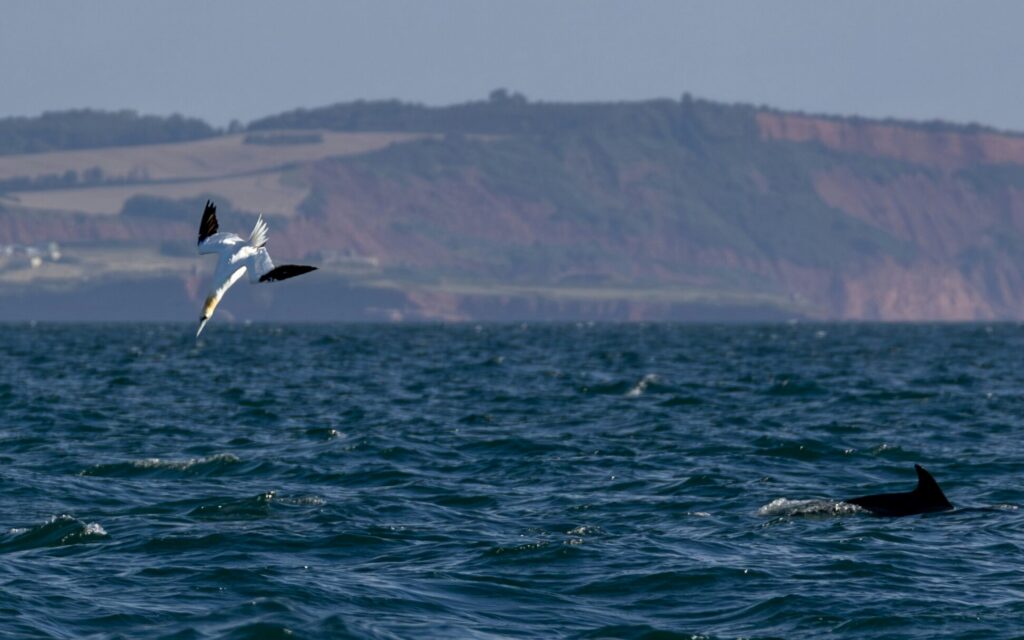
Gannet Diving at 60mph
The Bass Rock historically held the title of the world’s largest single-island colony of northern gannets. However, the colony faced its darkest chapter in recent history. In the summer of 2022, Highly Pathogenic Avian Influenza (HPAI) commonly known as bird flu ripped through the tightly packed nests with devastating speed.
Before the outbreak, the island was home to roughly 150,000 to 160,000 birds. By 2023, the population had plummeted by nearly 30%, dropping down to around 105,000 birds. The sight of thousands of dead birds on the nests was heartbreaking for researchers and conservationists worldwide.
But there is incredible resilience here. According to the most recent data from advanced drone and machine learning surveys conducted by the Scottish Seabird Centre, Edinburgh Napier University, and the University of Edinburgh, the colony has finally stabilised. The latest 100% full-coverage drone census confirmed approximately 52,459 active nesting sites (meaning well over 100,000 individual breeding birds are currently using the rock).
To safeguard this fragile recovery, the island has just entered a historic new chapter. After 320 years of private ownership by the Dalrymple family, RSPB Scotland has officially purchased the Bass Rock (alongside neighbouring Craigleith). Working hand-in-hand with the Scottish Seabird Centre, this monumental buyout means the rock is now a permanently protected nature reserve giving conservationists the tools they need to defend the surviving colonies against future disease outbreaks and marine industry threats.
While the population is still recovering from that 30% loss and chick-rearing success remains low as the colony rebuilds its numbers, this major new layer of protection paired with the lack of ongoing mass mortality is a huge beacon of hope for the future of the Bass.
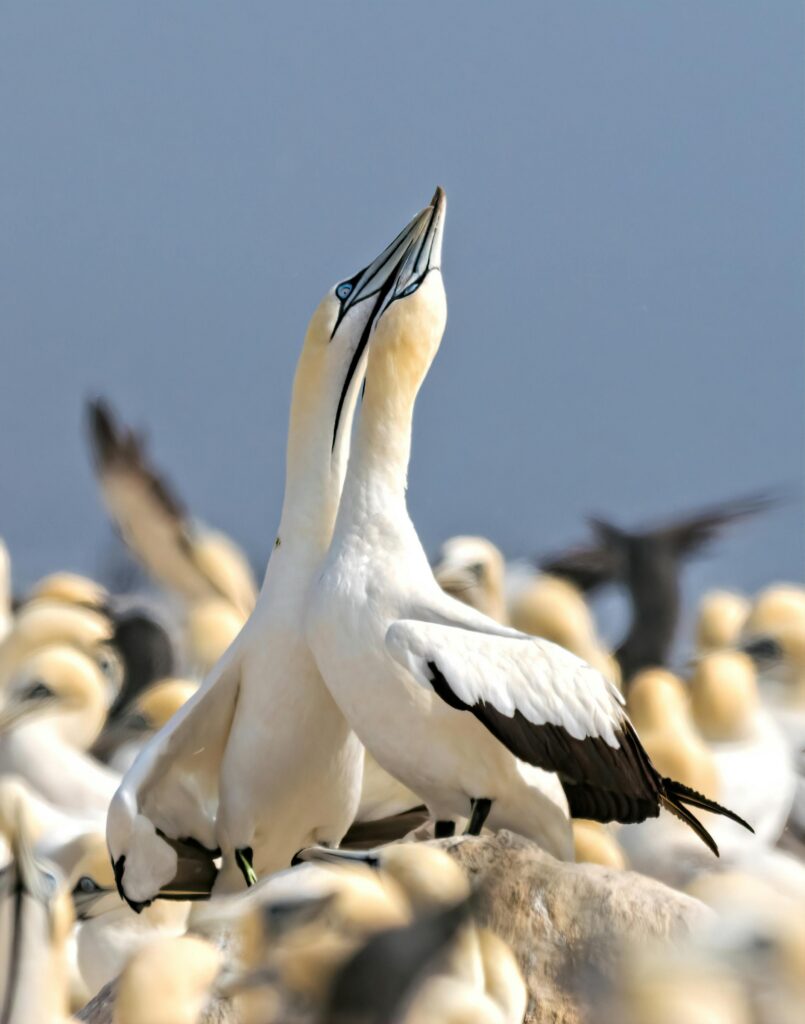
Gannet Courtship on Bass Rock
One of the best things about the Bass Rock is how incredibly accessible it is for a day trip out of Scotland’s capital city.
Getting there is a breeze: hop on the direct ScotRail train from Edinburgh Waverley station bound for North Berwick. The train ride takes just 30 minutes, runs frequently, and costs only £9.10 for a return ticket. From North Berwick station, it is a lovely, flat, 15-minute stroll through the vibrant high street down to the bustling harbour where the official boat trips depart.
If you want to make a full day of it, North Berwick is packed with brilliant things to see right next to the town centre before or after your boat cruise:
Conquer North Berwick Law: Climb this iconic volcanic hill, the geological sibling of Bass Rock. It is right behind the town for a spectacular 360-degree view of the Bass Rock and the coast.
Visit the Scottish Seabird Centre: Located right at the harbour, this interactive conservation hub lets you use live cameras to zoom in on the gannets.
Explore St Andrew’s Old Kirk: Check out the eerie 12th-century church ruins by the harbour, famous for the 1590 North Berwick Witch Trials.
Play a Round of Links Golf: Tee off at the historic North Berwick Golf Club or Glen Golf Club, which features dramatic cliffside backdrops of the rock.
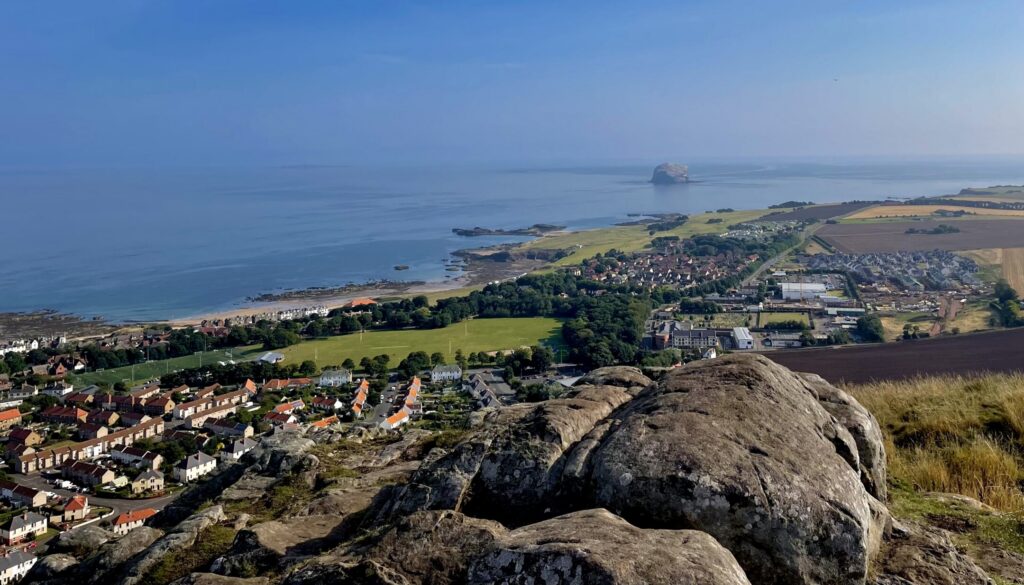
View from North Berwick Law